SyndicatedBusiness
Blue wave in CT legislature may test Lamont on taxing the rich
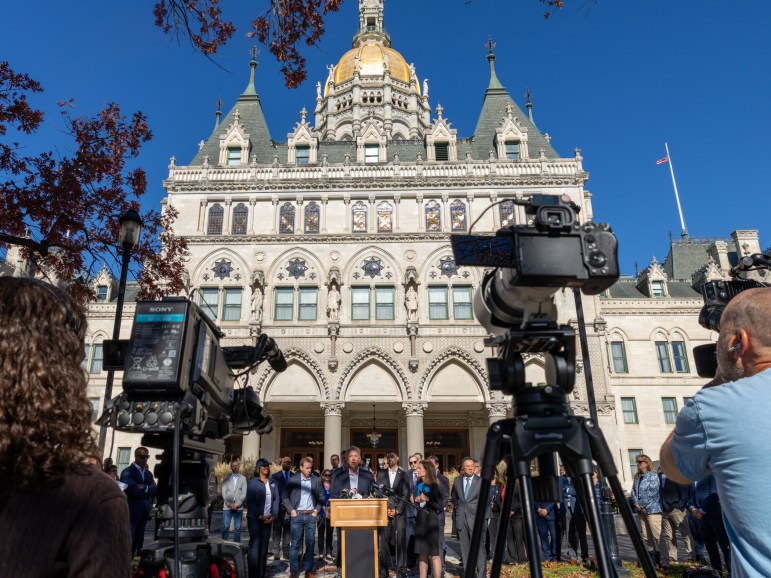
Gov. Ned Lamont speaks during a post-Election Day news briefing at the state Capitol in Hartford on Wednesday, Nov. 4, 2026.
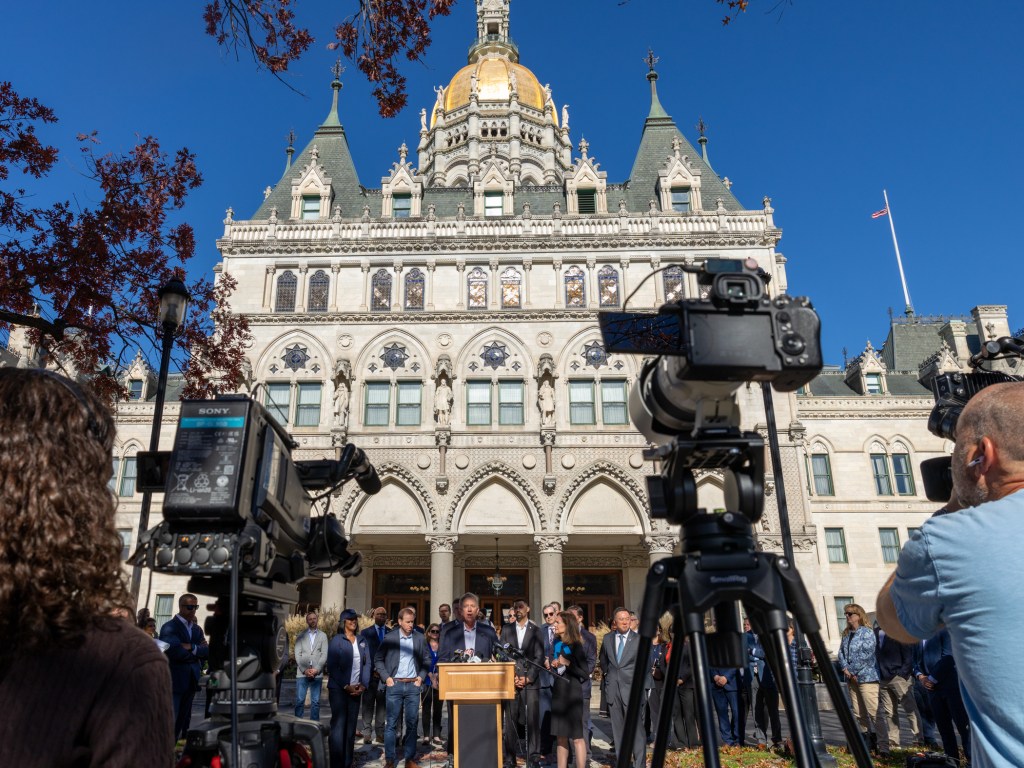
Gov. Ned Lamont speaks during a post-Election Day news briefing at the state Capitol in Hartford on Wednesday, Nov. 4, 2026.
" data-large-file="https://ctmirror.org/wp-content/uploads/2026/11/POST-ELECTION-1104-SG-14-771x578.jpg" /> State legislators have talked about taxing Connecticut’s wealthy to finance relief for the poor and middle class, but for most of the past eight years, it’s only been talk.
Because doing otherwise meant crossing one of Gov. Ned Lamont’s deepest lines in the political sand.
But after winning historic majorities Tuesday in the state House and Senate, Democratic legislators — who campaigned on pledges to reverse Connecticut’s affordability crisis — are poised to redefine their relationship with the governor, just in time for a watershed debate over state finances.
The numbers “position us more strongly than in years past to be more assertive,” said House Majority Leader Jason Rojas of East Hartford. He leads a Democratic caucus that will hold 116 out of 151 House seats, numbers not seen since immediately post-Watergate.
“We’ve been duly elected, and we have a mandate to improve affordability,” said Norwalk Democrat Bob Duff, majority leader in the Senate, where his party’s 33-3 advantage will be the widest in state history.
And while Rojas says he’s confident his colleagues will work “constructively and in partnership with the Democratic governor,” the two sides bring different perspectives to the regular 2027 session, which convenes Jan. 6. Duff says the same.
Lamont, who easily won a third term Tuesday over Greenwich Republican Ryan Fazio, also has stressed affordability.
But the governor repeatedly insists Connecticut needs “more taxpayers, not more taxes” and says raising state income tax rates on the rich only would drive them from the state. Lamont, a former cable TV entrepreneur, and his wife Annie, a co-founder of a venture capital firm, also live in Greenwich.
And when asked Wednesday what mandate he believes voters delivered, Lamont said people like the status quo, “how we’re managing through these very complicated times.”
But can Connecticut invest in programs, pay down its hefty debt and deliver noticeable relief, all at the same time?
Tax compromise was easy when CT was awash in federal grants
For most of Lamont’s tenure, it was relatively easy to find common ground with more liberal Democrats on budget issues.
Between 2020 and 2025, state government was awash in more than $4 billion in federal COVID grants. So even as budget caps pulled more than $1 billion in traditional state funds yearly off the budget, pandemic grants, exempt from such restrictions, could be spent in their place.
By 2026, though, those funds were exhausted, and Connecticut’s happy budget picture began to darken.
Suring Medicaid costs ate into funds earmarked to expand affordable childcare. To keep the latter program on schedule, state officials tapped a cap-protected surplus that normally would have reduced pension debt.
They went to the same well to find another $280 million in extra municipal aid last summer, just as their reelection campaigns launched.
It’s unclear whether Lamont will keep bending budget rules next year.
Meanwhile, advocates say hundreds of millions are needed to properly compensate doctors who treat Medicaid patients, a problem largely ignored for two decades. And a citizens’ assembly reported last month that local schools are being buried under billions in annual special education costs the state needs to assume.
Lamont insisted during the campaign and again Wednesday that he would “maintain the momentum to speed up transportation in this state.” His administration already announced plans to reduce borrowing for highway, bridge and rail upgrades.
Connecticut’s list of problems only gets longer unless the new Democratic-controlled Congress can convince President Donald Trump to reverse some of the deep cuts ordered last year to federal human services programs.
More than 60,000 residents, including almost 19,000 children, have lost eligibility for federal Supplemental Nutrition Assistance Program benefits since July 2025, and anti-hunger advocates want a state-funded program to assist the neediest of that group.
Many legislators and Lamont also say they want to use state funds to replace some of the nearly $300 million in healthcare tax credits Trump and Congress took away. Connecticut used $115 million last winter to assist more than 100,000 low- and moderate-income residents.
Candelora: There’s ‘enormous pressure’ on Dems to cut taxes
State House Speaker Matt Ritter, D-Hartford, said Thursday, “We can have pretty good confidence they [federal officials] are going to act” and reverse some cuts, though it’s unclear how long that may take.
Meanwhile, can Connecticut maintain pre-election investments in childcare and town aid, spend more on other programs, and take big chunks out of its debt — all while delivering new tax cuts to working households and sparing the rich from any hikes?
Democratic legislative leaders declined to speculate.
“I think it’s too early for me to say where the caucus is going to be on that,” Ritter said.
“They’re going to bring [those objectives] to the caucus, and they’re going to get things done,” Duff said.
But House Minority Leader Vincent J. Candelora, R-North Branford, said the writing is on the wall.
“There definitely was a progressive element that got elected,” said Candelora, who, like most Republicans, opposes raising taxes on one group to finance relief for another. “There is going to be enormous pressure on these people who ran on ‘affordability’” to deliver big state tax cuts.
GOP lawmakers say Democrats repeatedly ignore opportunities to cut state spending, doling out excessive raises to state workers, ignoring huge reserves at public colleges and universities and refusing to eliminate unnecessary jobs in dozens of state agencies.
Carol Platt Liebau, president of the Yankee Institute, a conservative fiscal think-tank, also fears Democratic agenda includes tax hikes when they could curb spending instead.
“One of the biggest temptations after a sweeping election victory is to assume you’ve been given a blank check,” she said. “But winning an election doesn’t repeal economic reality. Connecticut families and businesses are already struggling with high taxes, expensive energy and burdensome regulations. The last thing they need is more of the same.”
But tax reform advocates say it’s time to be realistic. Education, human services and municipal aid all need additional funds, and low- and middle-income families need relief. Addressing all of those problems could well require asking more from the state’s top earners, who faced an income tax hike in 2015.
“I don’t think voters are going to welcome a honeymoon period,” said Meghan Holden, spokeswoman for The Connecticut Project, a policy group pressing for a new state income tax credit to assist renters. “They really expect government to be ready to serve them from Day One.”
“One of the takeaways from the midterm elections should be that economic justice strengthens democracy,” said Emily Byrne, executive director of Connecticut Voices for Children. “Now we need democracy to strengthen economic justice.”
The Connecticut Project recently released a Wesleyan University poll showing more than 70% of voters back both tax-cutting options and 76% favor “increasing taxes on millionaires and billionaires.”
And Byrne notes that state government has been releasing tax fairness studies since 2014 that show low- and middle-income households pay far higher effective tax rates than do Connecticut’s top earners.
The citizens’ assembly seeking more aid for local schools and municipal budgets also recommended what many call a “millionaires’ tax.”
Rojas said he doesn’t believe Democratic legislators are predisposed to such a tax hike.
But he echoed an argument raised last month by Salisbury Democrat Maria Horn, who co-chairs the tax-writing Finance, Revenue and Bonding Committee. Simply put, that option no longer can be dismissed out of hand, Rojas said.
“It deserves its time before the legislature,” he added. “In order to arrive at a thoughtful end result, it needs to be part of the conversation.”